On real Northeast Ohio numbers the two land close together, and a site that claimed otherwise would be selling. Sixteen pushes at $50 is $800, against a published season band of $550 to $1,250. The reason to buy a season is not the price. It is the spread.
A west-side Cleveland contractor states that its service is built around 16 snow removal occurrences in an average winter. That is a local operator’s own planning figure, and it is the only honest denominator available here.
Sixteen visits at the published $50 and up per push is $800 of per-push billing. The published season band for the same kind of property is $550 to $1,250. Those two overlap almost completely.
What this page will not do is invent an event count. A published number of days with two inches or more does not exist for Cleveland. What does exist, at Cleveland Hopkins for 1991–2020, is 45.8 days a year with 0.1″ or more, 19.5 days with 1″ or more and 6.3 days with 3″ or more, plus 2.5 days with 5″ and 0.2 with 10″. The 16-occurrence figure is an operator’s assumption, labeled as one.
2022–23 finished at 22.7 inches at Cleveland Hopkins — roughly forty inches below normal — and even the snow-belt counties east of the city took only 30 to 60 inches against normals of 70 to over 100. A season contract that winter was money spent on very little work.
Then in late November 2024, a single lake-effect event dropped two to five feet across the snow belt in five days at rates of one to three inches an hour, with a maximum of 63.2 inches at Saybrook. Per-push billing that week alone would have run past a whole season price in many places.
Neither of those was forecastable in October. A season contract is insurance against the second winter, paid for by slightly overpaying in the first. That is a reasonable thing to buy; it is just not a discount, and it should not be sold as one.
The second argument is operational rather than financial, and it matters more at 6 a.m. than the arithmetic does. Season customers are the route. They are cleared in route order, because the route was built around them in October. Per-push customers are cleared when the route is done and when somebody answers the phone.
On an ordinary two-inch night that difference is an hour. After a storm that puts two feet on the snow belt in three days, it is not an hour.
If you are west of the snow belt, the case is different and this site is not going to pretend otherwise. Sheffield Lake measured 20.1 inches in 2018–19, the lowest figure recorded in the metro that winter. North Ridgeville measured 34.0 and 32.0 in two consecutive seasons. Westlake measured 31.0.
Twenty to thirty inches spread across a winter is not many qualifying events at a two-inch trigger. In that part of the metro, asking for both numbers — the season price and the per-push rate — and doing the multiplication yourself is a genuinely reasonable thing to do. Which zone you are in →
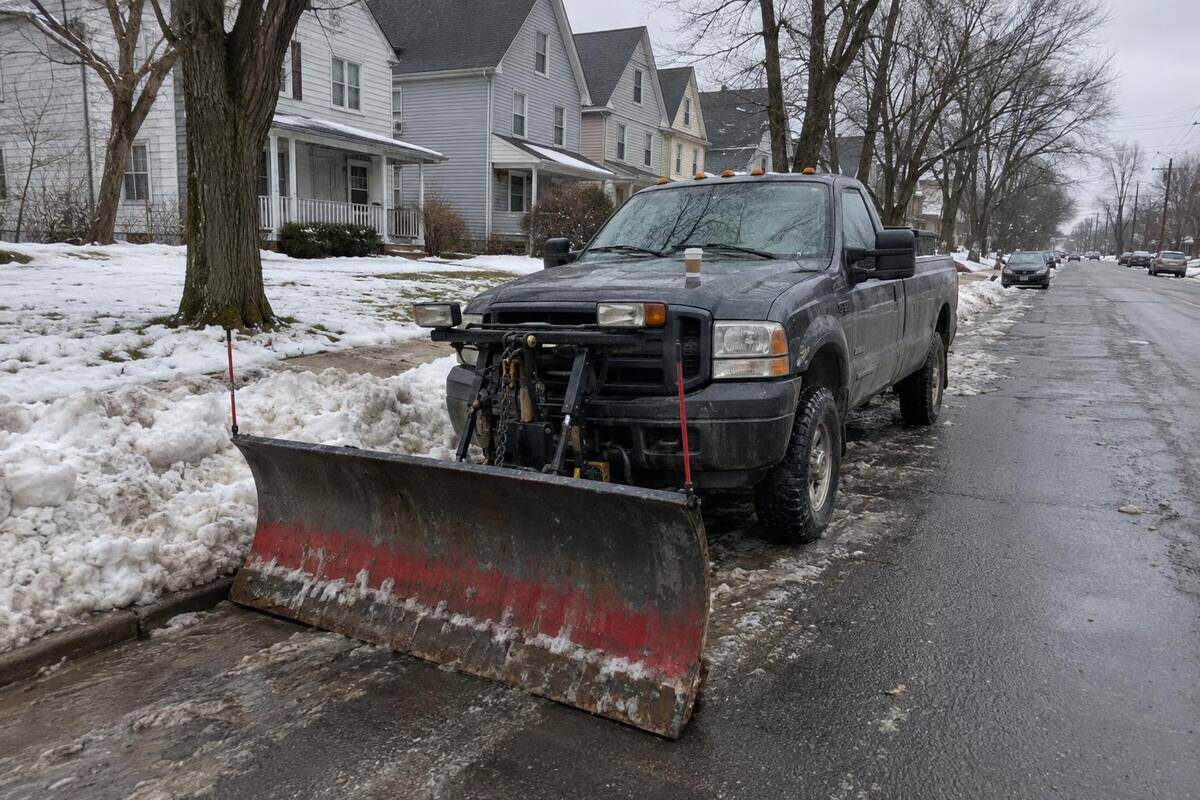
The season price and the per-push rate, from the same operator, with the trigger depth stated. Then the comparison is yours to make rather than theirs.
Call (216) 677-6862 Get a Season Price Cleveland