The wall of packed snow the city plow leaves across the end of your driveway is yours, and the cities say so in writing. Solon calls it nearly impossible to avoid. Lakewood cites roughly 15,000 driveway aprons as the reason it cannot come back for them.
Solon: “It is nearly impossible for the plow truck drivers to avoid pushing snow back into the driveway apron.” The city also warns that snow residents push into the street simply gets pushed back.
Lakewood: “Snow left in driveway aprons by the city while snow plowing is the residents’ and owners’ responsibility to remove.” The city puts the number at roughly 15,000 aprons citywide.
Mentor: property owners are responsible for their sidewalks and their driveway aprons.
None of that is a complaint about the cities. A plow carrying a windrow cannot lift it over a driveway and set it down again. But it does mean the berm is a scheduled, recurring piece of work rather than an accident — and it is the single most common gap between what a homeowner assumed the contract covered and what it did.
Apron snow is not the same material as the snow on the rest of the driveway. It has been compressed by a blade, mixed with whatever is on the road, and frequently left long enough to bond to the pavement. It is heavier per shovel-load than anything else on the property and it is the part most likely to be there when you need to leave.
In Cleveland that timing problem compounds, because the city runs roughly 3,000 lane miles and says it takes three to four days to plow the entire city. A residential street plowed on day three deposits a fresh berm across a driveway that was cleared on day one.
So the term to get in writing is the return pass. Is the operator coming back after the city plow, and is that inside the season price or billed per visit? On a per-push contract, does a berm-only trip count as a push?
One habit costs nothing and works: when you clear the end of the driveway yourself, put the snow on the downstream side relative to the direction the plow travels — the side the blade is carrying snow away toward. The next pass then takes your pile along the street rather than depositing it back across your apron.
Watch one pass on your street and the direction is obvious. Almost nobody does this, and on a street plowed three or four times in a storm cycle it makes a real difference.
What does not work, and is prohibited in several cities here, is pushing the berm back into the road. Mentor, Solon, Lakewood and Chagrin Falls all address it, and Solon names contractors specifically. The rules →
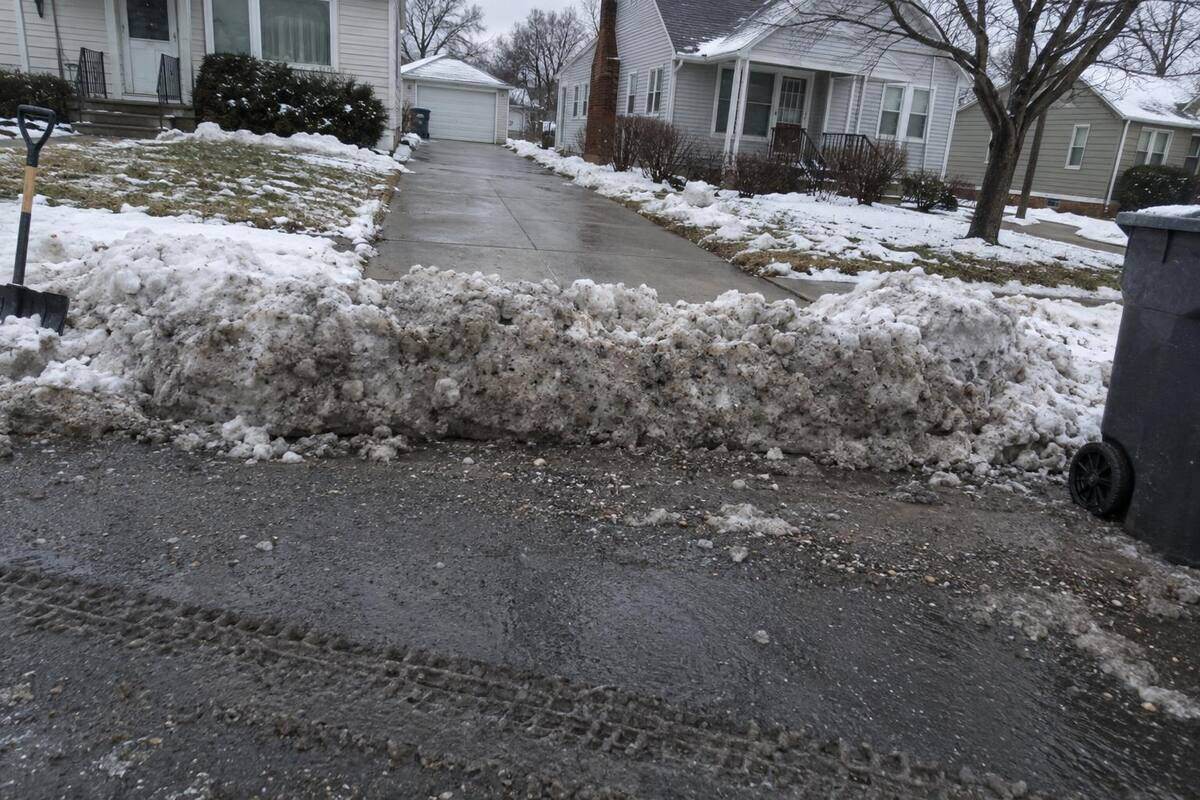
Ask whether clearing the berm after the city plow is included, and what happens on a storm the city takes three days to finish. It is the most common surprise in a Northeast Ohio winter.
Call (216) 677-6862 Get a Season Price Cleveland