Rock salt stops working at about 15°F. Calcium chloride works down to −25°F and magnesium chloride to 5°F. In a metro where the cities themselves salt only the intersections and the hills, knowing which material the forecast calls for is most of the job.
Sodium chloride — ordinary rock salt — works by lowering the freezing point of water, and its useful range runs out around 15°F. Below that it sits on the surface as grit. Calcium chloride keeps working to roughly −25°F, and magnesium chloride to about 5°F.
That is the whole explanation for the most common winter complaint in Northeast Ohio: “I salted it and it did not melt.” On a genuinely cold morning after a lake-effect night, rock salt is the wrong tool, and adding more of it makes no difference at all.
Good practice is the opposite of volume. Pre-treating before the storm — the City of Cleveland pre-treats six to eight hours before temperatures drop below freezing — puts down far less material than trying to break a bond afterwards. And spot treatment beats blanket coverage: intersections, curves, hills, bridge decks and the three feet at the bottom of a slope are where it earns its cost.
This is worth knowing before you decide what to buy. Shaker Heights salts only major intersections, rarely secondary or side roads, and never between midnight and 4 a.m. Lakewood applies salt within about 100 feet of side-street intersections and on all hills, and not much else. Mentor brines bridge decks and main roads ahead of a storm and salts hills, curves and intersections after the snow ends.
Cleveland does salt at scale — over 22,000 tons and 23,000 gallons of liquid de-icer in a season — but it is also covering roughly 3,000 lane miles and working mains and secondaries first. None of it reaches your walk or your driveway.
There is no Ohio salt-applicator certification program and no rule limiting what a private contractor may apply, so there is no credential to ask for — and an operator who implies there is, is overstating it.
What Ohio does have is money in the problem. The H2Ohio Rivers Initiative chloride reduction grants put $1.7 million into more than thirty municipalities and counties: $1.12 million to twenty-two local governments for salt-application equipment upgrades and $569,000 to nine for salt storage and loading facilities, with Cuyahoga, Lake, Lorain, Erie and Summit counties all receiving equipment grants. More than 260 applications came in, seeking over $14 million.
Chloride does not break down and there is no economical way to take it back out of water. The practical version for a homeowner is simple: an operator using the right material at the right time uses less of it, and that is the same operator whose treatment actually works at 10°F.
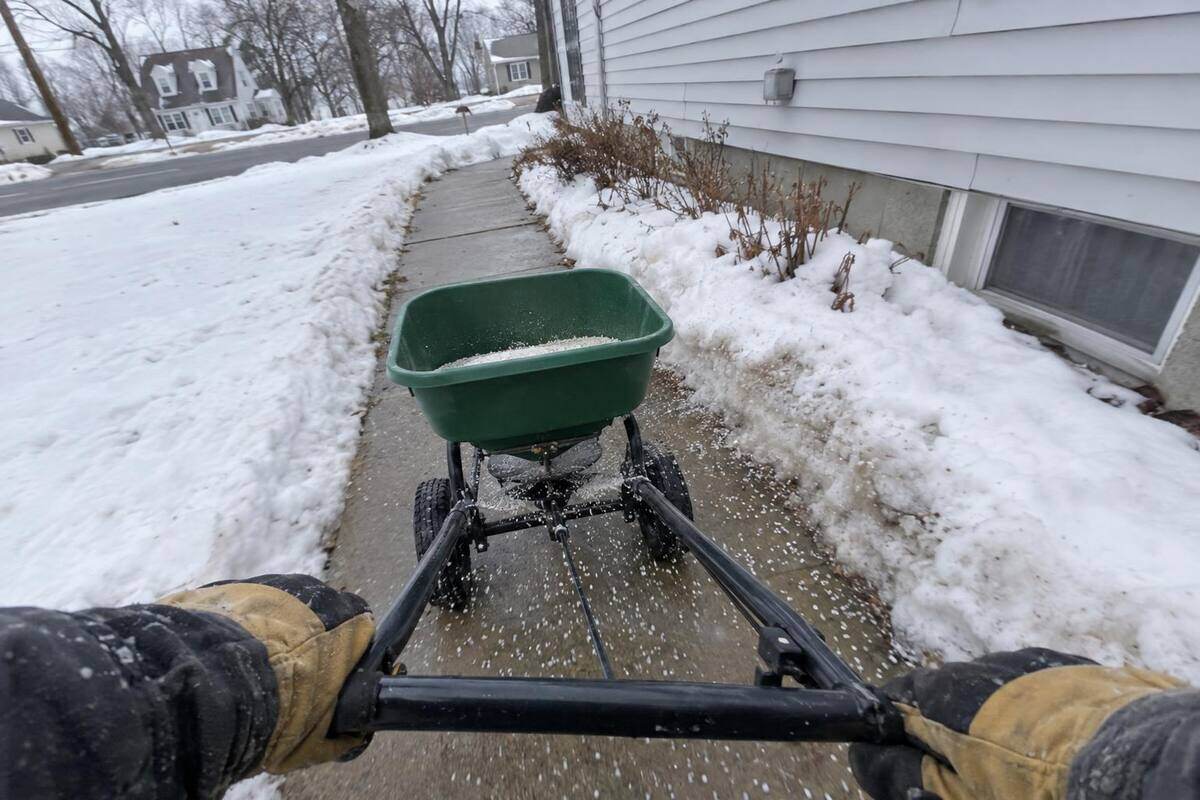
Material, timing relative to the storm, and which parts of the property get treated. Those three answers separate an ice-control plan from a bag of salt.
Call (216) 677-6862 Get a Season Price Cleveland