Retail is the segment the per-push depth-tier contract was built for, and it is also the one where the entrance matters more than the lot. Customers judge a site by the twenty feet between the car and the door.
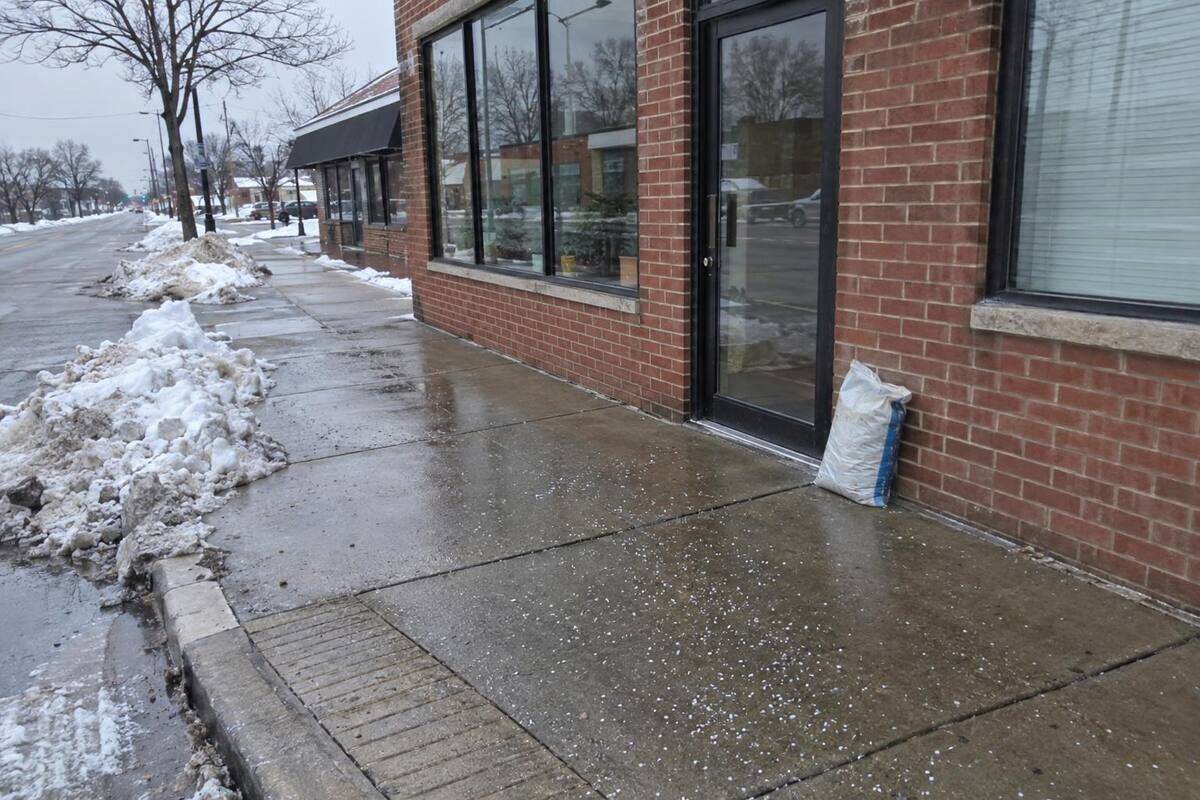
The entrance is the product. Doorways, the walk from the nearest spaces, curb ramps and any outdoor seating or queue area. Those have to be right at opening, which means the work happens before it rather than during it.
Depth tiers keep it honest. A per-push contract banded at 2 to 4, 4 to 6 and 6 to 8 inches means a light winter costs less and a heavy one costs more without renegotiating. That is why retail property managers favor it.
Documentation is not paperwork. Time-stamped records of when each visit happened and what was applied are the difference between defending a slip-and-fall claim and not being able to. Ask for it as a contract term rather than hoping it exists.
In Cleveland a commercial sidewalk frontage carries the same before 9 a.m. daily rule a house does — and Westlake bills commercial sidewalk clearing at $50 per 50 feet plus labor if the city ends up doing it. City rules →
Three contract structures are standard in Northeast Ohio, and a major regional commercial operator describes all three:
Trigger depths run tighter on commercial work than the two-inch residential standard — commonly one to two inches, set in the contract. On a site with foot traffic that difference is the whole point.
No dollar figures appear on this page, deliberately. Not one Cleveland-area commercial snow operator publishes a seasonal price, and the page that currently ranks for the question quotes hourly and seasonal tiers with no local contractor, survey or data source cited anywhere in it. Repeating those numbers would make this page rank and would be making things up. What is documented is the structure, and that is what is here.
Ohio issues no snow removal license — the state board covers five trades and this is not one of them — so verification is insurance and registration. Ohio is also a monopolistic workers’ compensation state: coverage is available only through the Ohio Bureau of Workers’ Compensation, and any business with even one employee must carry it.
And one local requirement that applies to commercial work specifically: Cleveland Heights requires commercial snow removal contractors to hold a city permit, post a $10,000 surety bond and carry continuous insurance under Chapter 751, refiled every December 31. If the property is there, ask whether the operator is current. Chapter 751 → · Ohio rules →
Site address, surface area, the priority order for entrances and lanes, and the hours it has to be open. That is what a commercial quote is built from.
Call (216) 677-6862 Get a Season Price Cleveland